
hiya-sync-curious-woman
Process Step 1
Process Step 2

Hiya Sync

Hormones shift across your cycle — and a single test day often misses the full picture. Hiya Sync measures your hormones at two key points: Day 3 (your baseline) and after ovulation, your luteal phase (typically around Day 21 in a regular cycle). This allows you to see whether you’re ovulating, how well your cycle is regulated, and whether your hormone levels rise and fall in sync. It’s especially useful if you experience irregular cycles, short luteal phases, spotting before/after your period, or aren’t sure if you’re ovulating — even when standard tests say everything looks “normal.” Your results include a doctor-reviewed interpretation and clear guidance on what’s in range, what’s not, and what it could mean for your hormonal health.
  • Analysed byISO-accredited lab

  • Tracked 24–48 hourdelivery

  • Personalisedclinician advice

  • Professional sample collectionFlexible sampling options

When to get test: During your baseline (around Day 3) and luteal phase (typically around Day 21) — Hiya helps you identify the right days based on your cycle pattern.

What's Measured

FSH, LH, Estradiol and Progesterone

💧4 Biomarkers

What it is: FSH is produced by the pituitary gland and supports the early growth of ovarian follicles, helping an egg mature at the start of each cycle. Why we measure it: It shows how your ovaries are responding during the early follicular phase, helping build a clearer picture of your reproductive hormone activity.

What it is: LH is a pituitary hormone that rises sharply mid-cycle to trigger ovulation. Why we measure it: Understanding LH helps you learn when ovulation is likely to occur and how your cycle is unfolding.

What it is: Estradiol is the main form of estrogen in women and plays a key role in follicle development, endometrial growth, and overall cycle regulation. Why we measure it: It reflects how your ovaries are functioning and how your cycle is progressing through each phase.

What it is: Progesterone is a hormone produced by the ovaries, released after ovulation to support the luteal phase and prepare the uterine lining for the second half of the cycle. Why we measure it: Measuring progesterone helps confirm whether ovulation has occurred and whether your luteal phase is developing as expected.

What's Measured

FSH, LH, Estradiol and Progesterone

💧4 Biomarkers

What it is: FSH is produced by the pituitary gland and supports the early growth of ovarian follicles, helping an egg mature at the start of each cycle. Why we measure it: It shows how your ovaries are responding during the early follicular phase, helping build a clearer picture of your reproductive hormone activity.

What it is: LH is a pituitary hormone that rises sharply mid-cycle to trigger ovulation. Why we measure it: Understanding LH helps you learn when ovulation is likely to occur and how your cycle is unfolding.

What it is: Estradiol is the main form of estrogen in women and plays a key role in follicle development, endometrial growth, and overall cycle regulation. Why we measure it: It reflects how your ovaries are functioning and how your cycle is progressing through each phase.

What it is: Progesterone is a hormone produced by the ovaries, released after ovulation to support the luteal phase and prepare the uterine lining for the second half of the cycle. Why we measure it: Measuring progesterone helps confirm whether ovulation has occurred and whether your luteal phase is developing as expected.

Why Take This Test

To assess ovulation and overall cycle balance.

Who It's For

• Women with PMS, spotting, or short luteal phases

• For women with irregular period that are not sure they are ovulating

• Women tracking cycles for fertility or hormonal regulation

Your Aftercare Journey

What happens after your test

Your Results
|1

Your Results

You receive clear, doctor-reviewed reports at each stage of testing — a Day 3 baseline panel, a luteal-phase report, and a final overview that brings both results together. Each one explains what’s in range, what’s not, and what these patterns may mean for your cycle health

Why It Matters

Understanding your hormone levels across the cycle gives you a clearer view of ovulation, cycle balance, and how your hormones work together — helping you make informed decisions without guessing.

Your Care Plan
|2

Your Care Plan

Based on your results, you receive lifestyle recommendations designed to support your hormonal and thyroid health — including nutrition, movement, sleep, and stress guidance aligned with your cycle. You also have access to a doctor consultation to review your results, ask questions, and understand next steps.

Why It Matters

A personalised plan helps you translate your results into small, meaningful changes you can make right away — supporting your long-term reproductive wellbeing.

Follow-up & Support
|3

Follow-up & Support

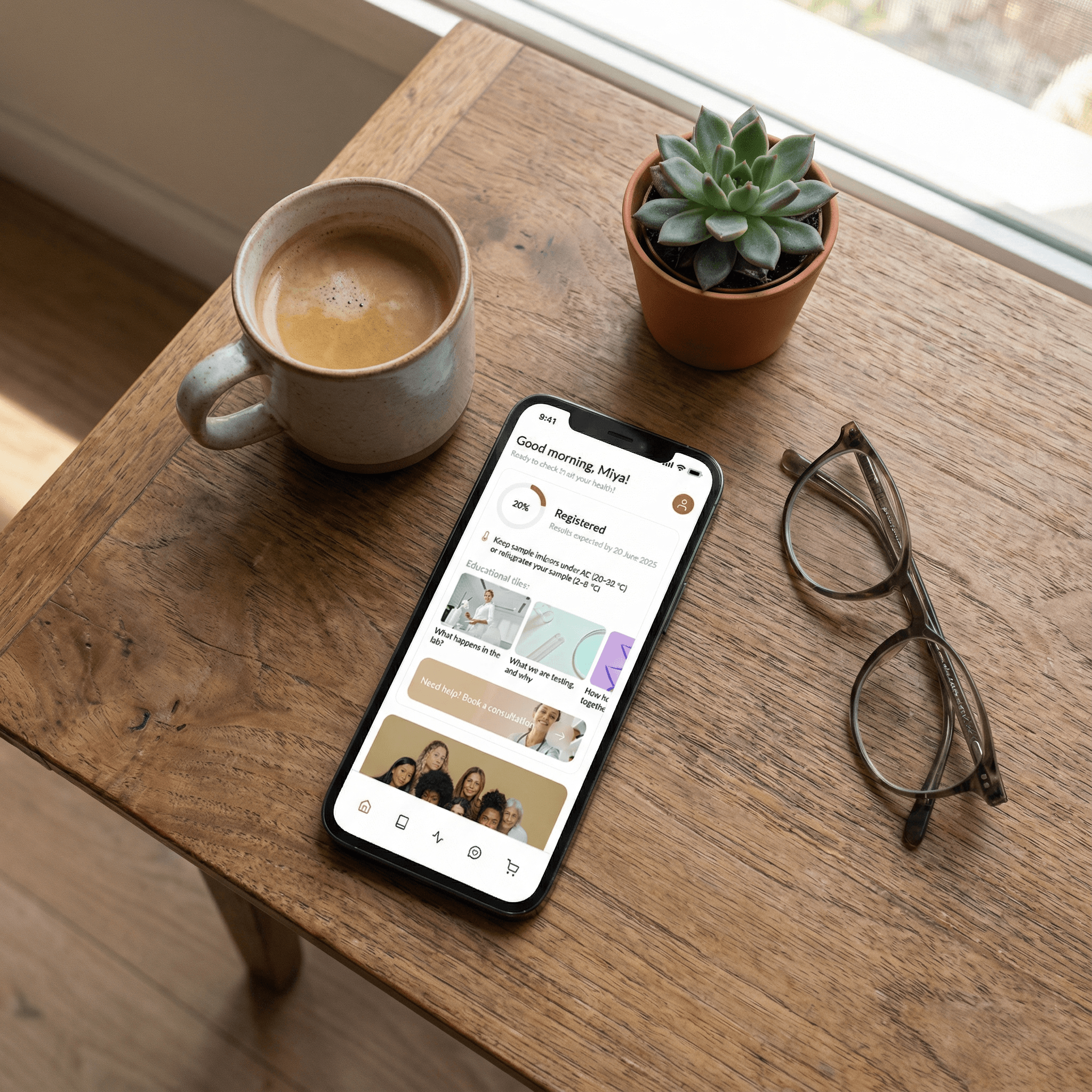
You receive reminders for your second test if your package includes two sampling days, ensuring you capture both phases accurately. When needed, we offer referral pathways to partner clinics for additional support. Inside the Hiya app, you also access educational content that helps you understand your hormones and your cycle with confidence.

Why It Matters

You’re not left to interpret your results alone. Consistent reminders, clear guidance, and access to the right clinicians help you move forward with clarity and care.

Browse by topic

Find answers faster

Search across every answer or jump straight into the topic that matches where you are in your Hiya journey.

14 matches

Science & Validation

Accuracy, laboratory standards, and how our validation study works.

1 answer
Your sample is analysed using Swiss Roche diagnostic assays, trusted globally for their accuracy and consistency.

Cycle Timing and day of testing

When to test, how to handle timing, and what to do if your cycle isn't typical.

6 answers
Day-3 testing happens between Day 2-5 of your period, when baseline hormones are most stable.
Hormones rise and fall throughout your cycle. Proper timing ensures accurate interpretation.
Many women don't, and that's okay. Hiya estimates your luteal window using your typical cycle length, recent period patterns, or symptoms, and adjusts timing if needed.
It is taken around seven days before your expected period, reflecting mid-luteal progesterone.
Very normal. Day-3 stays the same; luteal timing shifts with your cycle length and is always seven days before your next period.
Yes. Hiya identifies the closest early-cycle and luteal windows so your results still reflect meaningful patterns.

Can i test if…

Specific life stages and health situations.

2 answers
Yes. Testing can help you understand your current hormone patterns. While Hiya cannot diagnose or monitor medical conditions, our clinicians review your results with your history in mind and guide you on when further medical evaluation may be helpful.
Yes. Hormone testing can help you understand whether your cycle and ovulation patterns are aligning as expected. It's a supportive first step, but it does not replace fertility evaluation if you've been trying for some time. Our clinicians guide you gently on what to do next.

Sampling

What to expect on the day your sample is collected.

3 answers
No. Sampling is designed to feel simple, comfortable, and supported. You can visit one of our partner clinics or have a licensed nurse collect your sample at home-whichever feels right for you.
Typically 3-5 business days after your sample reaches the lab.
A trained professional collects a small blood sample using standard clinical techniques. The process takes only a few minutes and is designed to feel calm and safe.

Preparation

Simple steps to be ready for your draw or self-sample.

1 answer
No special preparation is needed. You can continue your normal routine, stay hydrated, and follow any instructions provided. When the self-sampling kit becomes available, it will include clear guidance to ensure you collect your sample safely and correctly at home.

Results

How to read your report and when to loop in a clinician for next steps.

1 answer
Your report walks you through each hormone in simple, clear language, explains what your levels may mean for your cycle and symptoms, and offers supportive guidance on next steps-including when a medical follow-up may be helpful.
Background Texture